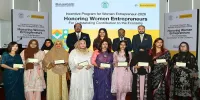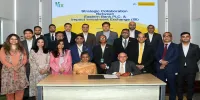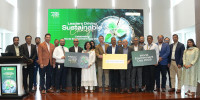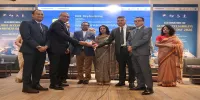
Eastern Bank PLC hosted the 2nd EBL Climate Change Action Awards 2026 on January 26 at the Radisson Blu Dhaka. This annual initiative is held in partnership with the European Union and embassies of Germany, France, Denmark, and Sweden. Bangladesh Bank Governor Dr Ahsan H. Mansur attended as the Chief Guest and EBL Managing Director Ali Reza Iftekhar was also present. The following EBL Climate Action Awards 2026 winners demonstrate excellence in environmental sustainability through locally-led initiatives in five categories: Green Manufacturing, Energy Efficiency, Climate Smart Agriculture, Climate Education, and Adaptation and Resilience.
Scaling tomorrow’s sustainable solutions
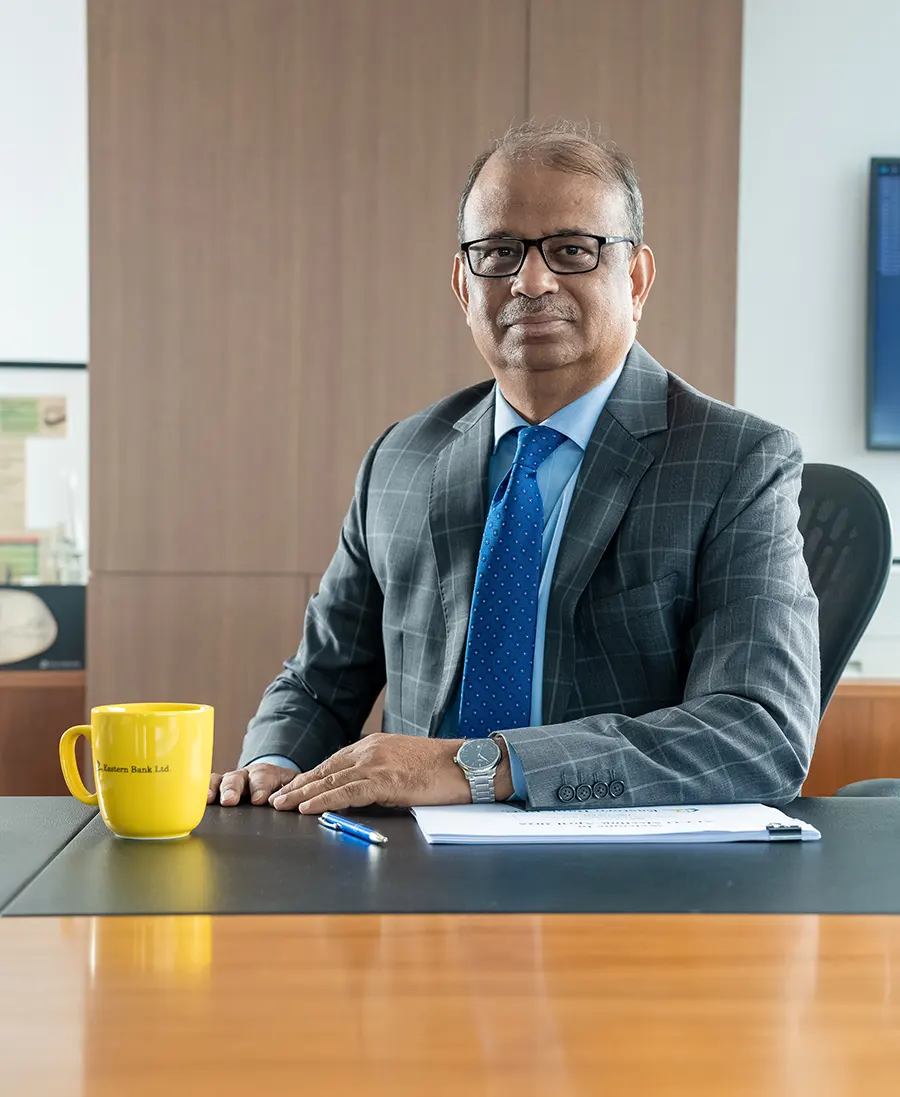
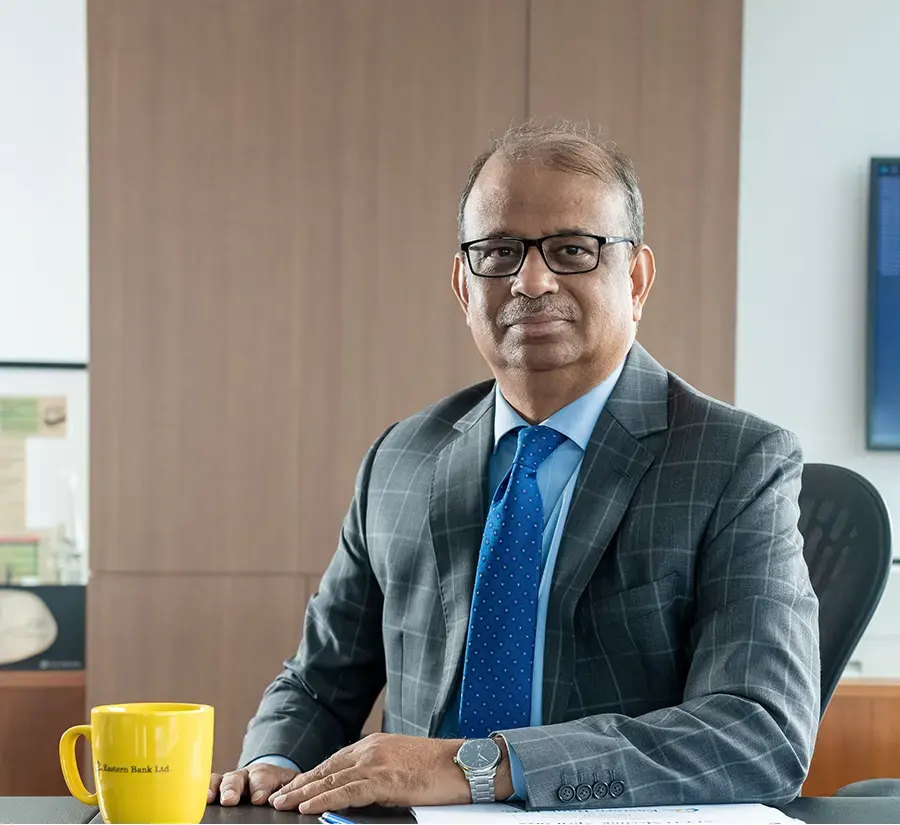
Ali Reza Iftekhar, Managing Director, EBL
“We believe it is critical to celebrate those who translate commitment into action through impactful climate solutions.”
Ali Reza Iftekhar, Managing Director, EBL
EBL is one of the leading financial institutions in Bangladesh dedicated to fostering sustainable development and environmental stewardship through innovative green finance and strategic climate action initiatives.
The Daily Star (TDS): What is the vision behind these awards and the specific impact you hope to achieve?
Ali Reza Iftekhar (ARI): The EBL Climate Change Action Awards recognise and amplify impactful climate solutions driving change in Bangladesh. By celebrating those who translate commitment into action, we spotlight innovation in green manufacturing and climate-smart agriculture. This initiative aims to inspire replication, attract investment, and foster collaboration for a sustainable future. Ultimately, the program honors pioneers protecting the environment through practical local solutions, accelerating the transition toward a resilient and climate-smart economy for the benefit of all.
TDS: How will these awards influence and transform the sustainability landscape in Bangladesh?
ARI: These awards act as a powerful catalyst for change within the sustainability landscape. By formally recognising high-impact initiatives through a transparent selection process, the programme helps set clear benchmarks for what meaningful climate action looks like. The awards bring visibility to successful models that can be scaled or adapted across different sectors. This encourages diverse industries to adopt sustainable practices and motivates organisations to integrate climate considerations into their core strategies. Importantly, the awards also help bridge the gap between innovation and policy discussions. By highlighting solutions that align with national priorities, the programme contributes to a more coordinated and action-orientated landscape in the country. It promotes a culture where environmental stewardship is valued as a key pillar of corporate success.
TDS: What other strategic measures is EBL taking to implement real climate action?
ARI: Beyond the awards, we have embedded climate responsibility into our core business strategy. We are the first bank in Bangladesh to initiate carbon accounting. Currently, over eighty per cent of our total lending portfolio is dedicated specifically to sustainable finance. We measure emissions from our financed portfolio and our own supply chain to ensure transparency. To reduce direct emissions, we use sustainable aviation fuel for document transportation to achieve a thirty per cent carbon reduction. We are developing a comprehensive decarbonisation roadmap that aims to exceed national climate targets. Additionally, we use a Climate Risk Assessment Module to evaluate physical and transition risks. This ensures that our framework aligns with global standards and supports international disclosure requirements.
An approach towards green manufacturing
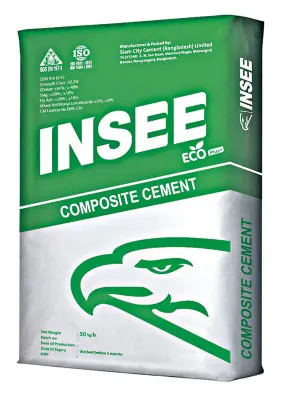
INSEE ECO Plus+ is a green cement launched by Siam City Cement (Bangladesh) Limited in 2024. Siam City Cement (Bangladesh) has secured the EBL Climate Change Action Award for its innovative approach to green manufacturing in Bangladesh. It is specifically engineered to withstand the aggressive salinity and corrosive soil conditions of Bangladesh’s coastal regions. By reducing clinker content to approximately 45–50 per cent through the integration of industrial by-products like slag and fly ash, the product achieves a 46 per cent lower carbon footprint than traditional Ordinary Portland Cement. It directly supports national climate commitments and global sustainability goals. Despite its low-clinker formulation, it provides superior durability, high surface resistivity, and enhanced chloride resistance. INSEE ECO Plus+ ensures a longer structural lifespan for infrastructure without compromising on compressive strength. Validated by rigorous scientific testing and technical partnerships, INSEE ECO Plus+ represents a transformative shift toward climate-smart construction and circular economy principles in the Bangladeshi market.
Sustainability cannot remain one‑sided from the seller’s perspective alone; it becomes meaningful only when products reach consumers who are aware and concerned. Buyers with sustainable requirements push companies to recognise their responsibility, and such recognition helps brands build stronger, lasting value.
- Mahmud Hasan, Chief Executive Officer and Managing Director, SCCBD
Transforming Sustainable Battery Infrastructure
“Cassetex has built a traceability tool ensuring batteries are managed responsibly to break the toxic cycle between cheap transport and suffering.”
- Tauseef Anwar, Co-founder & Chief Business Officer, Cassetex Ltd

Cassetex has secured the EBL Climate Change Action Award for its innovative approach to battery infrastructure in Bangladesh. The initiative tackles a severe public health crisis caused by toxic lead pollution from traditional lead-acid batteries. This contamination permanently affects brain development in children and damages the local food chain. To combat this, the company introduced a comprehensive traceability tool to manage the entire battery lifecycle. Their unique battery swapping model replaces long charging hours with instant service to ensure continuous productivity for drivers. These lithium-ion batteries are forty per cent lighter than conventional models, which allows vehicles to carry more load and generate higher income. Beyond transportation, the project aims to establish a national recycling centre to recover valuable minerals from battery waste. This strategic move could generate billions of dollars for the national economy while promoting energy independence. This initiative makes clean mobility truly sustainable for future generations.
Innovative Floating Pond Farming Success
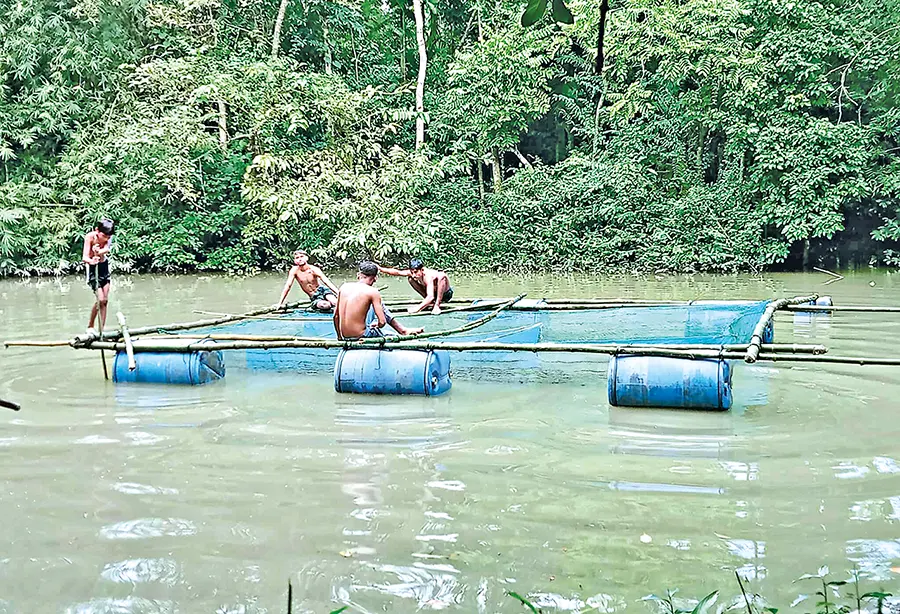
Youth Action for Sustainable Future (YASF) has received the EBL Climate Change Action Award for its innovative floating pond farming project in Mehediganj. This region faces frequent flooding that often washes away traditional fish stocks and destroys local livelihoods. To solve this crisis the organization introduced climate resilient structures built from bamboo and unused drums. These floating platforms keep fish nets secure during tidal surges and heavy monsoons. Additionally, farmers grow vegetables like bottle gourd on top of these structures to create a dual production system. This low-cost model reduces construction expenses by seventy percent compared to concrete embankments. Results show that fish survival rates have increased significantly since the implementation of this project. The initiative provides a scalable and sustainable solution for flood prone communities across Bangladesh. By empowering local farmers and youth volunteers the project ensures year-round food security and economic stability in vulnerable areas.
This low-cost and locally led approach substantially improves resilience, food security, and livelihood stability in flood-affected communities.
- Md Hanif, President, YASF
Somoy Nature advancing climate resilience
We are planning to establish a dedicated Climate, Environment and Nature Desk to provide regular coverage of regional and global climate issues, which will be among the first such initiatives in Bangladesh’s media landscape.
- Md A J Sagor, Host, Concept & Development Lead, Somoy Nature, Somoy TV.
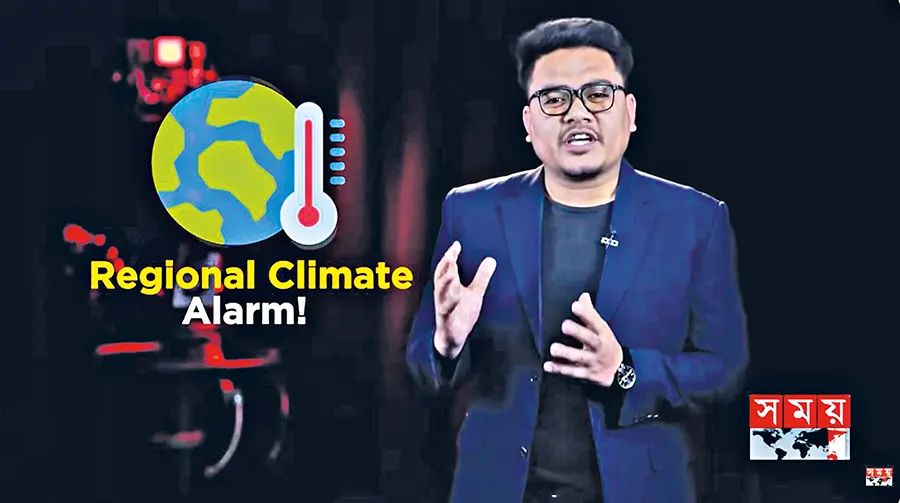
Somoy TV has achieved significant recognition by winning the EBL Climate Change Action Award for its pioneering initiative called Somoy Nature. This project effectively addresses the critical gap between complex scientific research and public understanding regarding environmental crises. Through a structured five step workflow, the production team creates data driven explainer videos that simplify essential topics like water security and disaster risks. The initiative has reached over twenty million people across various digital platforms and has successfully reduced public panic during national environmental emergencies. Expert collaborations ensure that every video report is scientifically accurate while remaining highly accessible to general audiences. National researchers and disaster management experts have praised the program for its essential role in fostering community resilience and informed policymaking. Looking forward, Somoy TV aims to expand this successful model across South Asia to tackle shared regional challenges together. This prestigious award highlights the vital role of media in building a climate smart society through responsible journalism and innovative visual storytelling.
Securing livelihoods against climate shocks
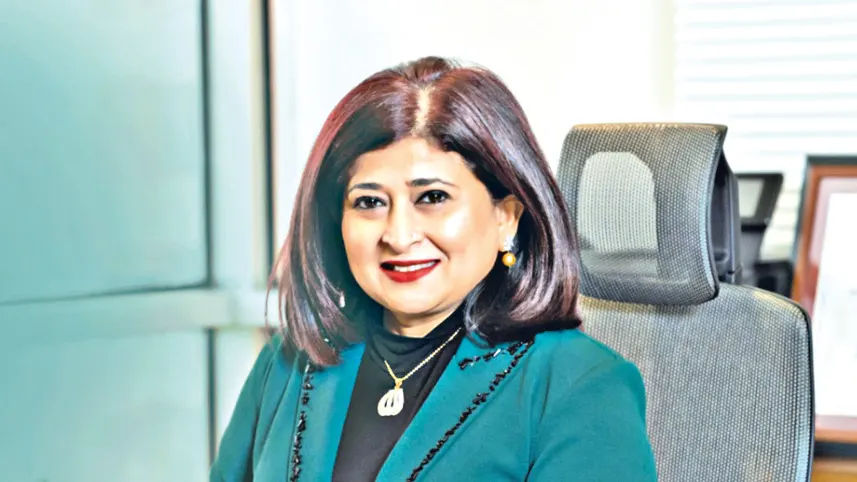
“We bridge the gap between climate vulnerability and financial stability, turning insurance into a practical tool for national resilience.”
Farzanah Chowdhury, Managing Director and CEO, Green Delta Insurance PLC
Green Delta Insurance (GDI) is a premier insurer, uniquely integrating inclusive microinsurance into its core business to provide sustainable financial protection for climate-vulnerable rural communities and smallholder farmers across Bangladesh.
The Daily Star (TDS): What specific climate vulnerabilities in Bangladesh led Green Delta Insurance to move beyond traditional insurance and develop a “Climate Risk Insurance” model?
Farzanah Chowdhury (FC): Bangladesh’s climate risk is structural, not occasional. Floods, cyclones, and erratic rainfall repeatedly disrupt rural livelihoods, particularly for smallholders outside formal safety nets. Traditional insurance, designed for low-frequency, high-value asset loss, was not built for this reality. We moved beyond conventional insurance because the greatest losses are often income and productivity, not just physical assets. Repeated shocks erode earnings and push households into debt. Green Delta Insurance is the only publicly listed insurer globally to integrate inclusive microinsurance into its core business not as CSR, but as a sustainable protection mechanism. Our philosophy is “any product, anywhere, any season,” utilising partnerships with the UNDP, IFC, and WFP to reach underserved communities.
TDS: How does GDI’s “parametric” model function, and what role does AI play in verifying livestock claims?
FC: Our parametric model triggers automatic payouts when predefined climate thresholds are crossed. By utilising satellite data and meteorological records, we remove subjectivity and eliminate the need for individual claim filings. For livestock, GDI uses AI-enabled biometric muzzle-print recognition and NFC tagging. This digital system allows us to verify animal identity instantly and prevent fraud, making rural livestock insurance commercially viable. Compared to traditional settlements that take months, our tech-driven process delivers payouts to mobile wallets within days, ensuring transparency and building trust among skeptical communities.
TDS: What are the quantitative milestones of GDI’s climate insurance portfolio in terms of household reach and claims disbursed?
FC: GDI has built the nation’s largest inclusive portfolio, insuring 1.63 million+ households across 50 districts. We have disbursed BDT 232+ million in claims, supporting 338,000 crop farmers and 25,000 flood-affected families. These milestones represent confidence restored, debt avoided, and stabilized livelihoods. Our experience shows that tech-driven insurance is a practical resilience tool, not just a financial product, ensuring national resilience.
Links